The health benefits of fenugreek are varied, such as relief from anemia, stomach disorders, respiratory disorders, oral ailments, diabetes, inflammations, wounds, and insomnia. It is beneficial in lactation and helps in improving digestion and hair health. It is also shown to reduce cholesterol levels and protect heart health, while simultaneously boosting the immune system and protecting against flu and various infections.
What is Fenugreek?
Fenugreek is an annual plant that is also known as methi. It is a member of the bean family and its scientific family name is Fabaceae. It is native to the Middle and Near East and is widely used in the Indian subcontinent. This annual plant has small round leaves. There is even evidence that the ancient Egyptians understood the benefits of this herb since its seeds have been found in tombs, particularly of Tutankhamen. This plant is grown in countries across the globe, but the majority is cultivated and consumed in India. [1]
Serving Size : Nutrient Value Water [g] 8.84 Energy 323 Energy [kJ] 1352 Protein [g] 23 Total lipid (fat) [g] 6.41 Ash [g] 3.4 Carbohydrate, by difference [g] 58.35 Fiber, total dietary [g] 24.6 Calcium, Ca [mg] 176 Iron, Fe [mg] 33.53 Magnesium, Mg [mg] 191 Phosphorus, P [mg] 296 Potassium, K [mg] 770 Sodium, Na [mg] 67 Zinc, Zn [mg] 2.5 Copper, Cu [mg] 1.11 Manganese, Mn [mg] 1.23 Selenium, Se [µg] 6.3 Vitamin C, total ascorbic acid [mg] 3 Thiamin [mg] 0.32 Riboflavin [mg] 0.37 Niacin [mg] 1.64 Vitamin B-6 [mg] 0.6 Folate, total [µg] 57 Folate, food [µg] 57 Folate, DFE [µg] 57 Vitamin A, RAE [µg] 3 Vitamin A, IU [IU] 60 Fatty acids, total saturated [g] 1.46 Phytosterols [mg] 140 Tryptophan [g] 0.39 Threonine [g] 0.9 Isoleucine [g] 1.24 Leucine [g] 1.76 Lysine [g] 1.68 Methionine [g] 0.34 Cystine [g] 0.37 Phenylalanine [g] 1.09 Tyrosine [g] 0.76 Valine [g] 1.1 Arginine [g] 2.47 Histidine [g] 0.67 Alanine [g] 1.02 Aspartic acid [g] 2.71 Glutamic acid [g] 3.99 Glycine [g] 1.31 Proline [g] 1.2 Serine [g] 1.22 Sources include : USDA [2]
Fenugreek Nutrition Facts
According to the USDA FoodData Central, fenugreek contains a variety of beneficial nutrients, including iron, magnesium, manganese, and copper, as well as vitamin B6, protein, and dietary fiber. It also contains antioxidants, powerful phytonutrients, including choline, trigonelline, yamogenin, gitogenin, diosgenin, tigogenin, and neotigogens. Most of the health benefits of fenugreek are due to the presence of saponins and fibers in it. [3] [4]
Health Benefits of Fenugreek
Fenugreek is used for herbal healing and has many important health benefits that are explained in greater detail, below.
Promotes Lactation
The journal Pediatrics states that delayed breastfeeding can increase the risk of neonatal mortality. This happens when the mother is not able to produce enough breastmilk. [5]
India’s traditional Ayurvedic physicians often prescribe fenugreek to nursing mothers. This benefit is attributed to the presence of diosgenin in it. Research in the Journal of Alternative and Complementary Medicine, New York, has successfully concluded that including fenugreek tea to the diet can help new mothers in increasing lactation. [6] [7] [8]
Note: Consult your doctor before adding fenugreek capsules/seeds in your diet during lactation.
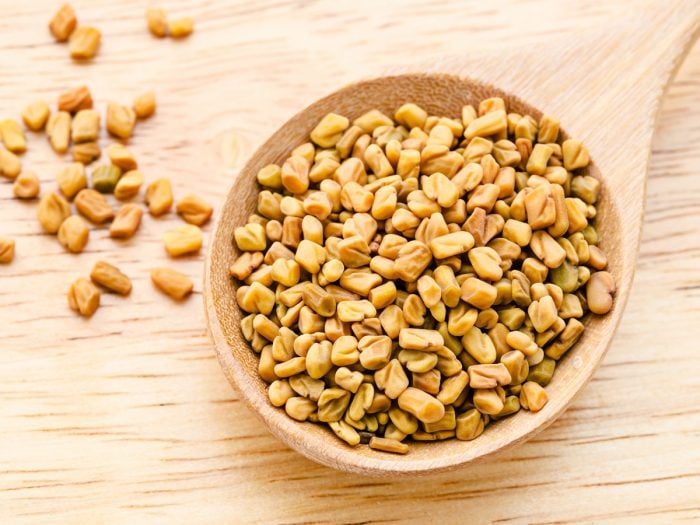
Fenugreek is an annual plant that is also known as methi. Photo Credit: Shutterstock
Reduces Menstrual Discomfort
Fenugreek seeds can be of help to relieve symptoms of menstrual discomfort and pain. A study published in the Journal of Reproduction & Infertility found that the powder of fenugreek seeds, when used by women who were menstruating, worked in reducing pain and reducing symptoms of dysmenorrhea. [9]
Minimizes Symptoms of Menopause
Menopause is marked by several symptoms such as hot flashes, sleep irregularities, weight changes, and vaginal dryness. Traditional and folk medicine offers a variety of alternatives to manage these symptoms, one of them being fenugreek which can be easily included in our diets. A 2017 review study highlighted that fenugreek manages these symptoms by inhibiting the excess activity of testosterone. Another study published in the journal Phytotherapy Research offers fenugreek husk extract as an accessible and safe option for menopause management. [10] [11]
Lowers Cholesterol Levels
Research published in The British Journal of Nutrition [12] shows that fenugreek consumption has efficacy in helping reduce cholesterol levels. It helps reduce the levels of LDL (bad) cholesterol significantly, which can prevent various conditions like atherosclerosis, heart attacks, and strokes. By reducing cholesterol content in the bloodstream, you reduce the risk of formation of blood clots. [13]
Satiates Appetite
The journal Phytotherapy Research has conducted research on the effects of fenugreek on appetite. They found that the natural soluble fiber, galactomannan, found in fenugreek helps suppress appetite by making you feel full. [14]
Reduces Cardiovascular Risks
Fenugreek seeds contain 25 percent galactomannan which is a type of natural soluble fiber that helps prevent heart diseases. [15]
Helps Manage Diabetes
Fenugreek extract helps alleviate type I and type II diabetes symptoms. A pilot study suggests that the addition of fenugreek seeds to the diet of diabetics helped in lowering blood glucose levels. Due to the presence of the natural fiber galactomannan, the herb slows down the rate at which sugar is absorbed into the bloodstream. The amino acid 4-hydroxy isoleucine is found in fenugreek, which regulates the release of insulin. This helps prevent the plunges and peaks of blood sugar in diabetics; 15-20 grams of fenugreek is usually recommended for controlling blood sugar on a daily basis. [16] [17]
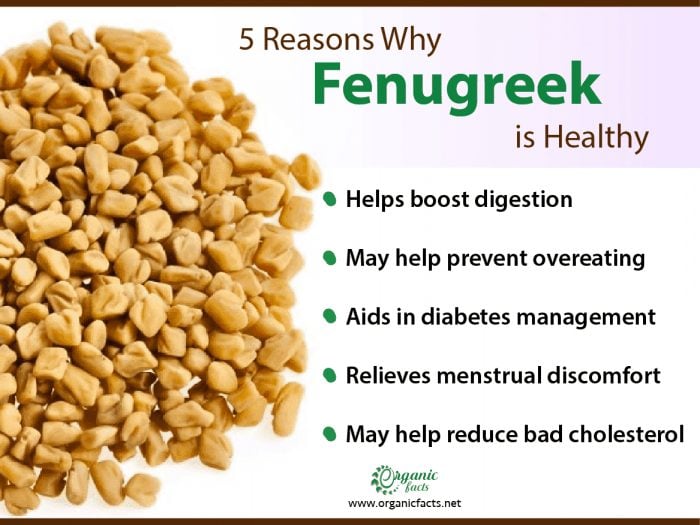
Fenugreek is an annual plant that is also known as methi.
Relieves Constipation
Fenugreek adds bulk to the stool due to its high fiber content. This also aids in treating constipation, diarrhea, and relieving minor indigestion.
Kidney Problems
Traditional Chinese medicine recommends the use of fenugreek for patients suffering from various kidney conditions. According to an animal study, fenugreek may help reduce the amount of calcification of kidneys and reduce the risk of developing kidney stones. However, more research would be needed to support the claim. [18] [19]
Relieves Sore Throat
Fenugreek is also very useful for providing relief from a sore throat, cough, and cold. A review study found that the seeds can be useful in clearing up the throat and acts as a mucus solvent. It can also be used in asthma, hay fever tuberculosis, sinusitis, and constipation. [20]
Other Benefits
Other benefits of fenugreek include the following: [21]
- Treats wounds, inflammation, and gastrointestinal ailments.
- It helps in battling free radicals due to its antioxidant properties.
- In Ayurvedic and Chinese medicine, it is used for inducing labor and aiding digestion.
- It helps improve the body’s overall metabolism and health.
- External application of fenugreek gives relief from irritated skin and other conditions.
- Acts as a febrifuge and gives relief from muscle aches.
Fenugreek is considered to be safe, herbal food. It is used as a spice in many cultures and tastes like bitter celery and maple syrup.
How much fenugreek to take?
If you are taking fenugreek for a particular reason, there can be some restrictions or guidelines for the usage amount. For example, if you want to take fenugreek to increase milk production (as a lactating mother), you can take up to 5500 milligrams every day (about 2-3 standard capsules 3 times per day). However, if you are simply using fenugreek as a general health booster, much lower doses are recommended and required to feel the effects.
Fenugreek Uses
You can use and consume fenugreek in many ways that include:
- The leaves can be dried and used as herbs.
- Fenugreek seeds can be eaten whole and are often used as toppings for certain dishes or soups.
- The seeds are primarily used as a spice and can be found sprinkled on top of many Asian dishes.
- These seeds can also be used in powdered form as a flavoring agent in curry pastes, soups, and stews.
- The plant matter itself can be used as a vegetable, like sprouts and microgreens.
- Fenugreek powder can also be used to make a healthy, energizing tea.
Word of Caution: Fenugreek is safe and is widely known as a great tonic for various parts of the body. However, fenugreek may cause mild gastrointestinal distress, diarrhea, gas, and indigestion in some, particularly in those who are allergic to it. It is not recommended during pregnancy because it may lead to miscarriage due to its strong effect on the female reproductive system.