If you are suffering from medical conditions like hypertension, arthritis, asthma, impotence, skin problems, anemia, obesity, constipation, diabetes, kidney problems, or heart diseases, perhaps it’s time for you to learn about the health benefits of barley. The benefits may be mostly attributed to the eight essential amino acids which it contains, meaning that it represents a complete protein in our diet. Recent research says that consuming whole grain barley is better for blood glucose management due to it having a low glycemic index value.
There are so many studies that have occurred in recent years, which suggest that even our regular diet lacks important nutrients. One of the most important nutrients that we often tend to neglect is fiber. Barley is an excellent source of both soluble and insoluble fiber, which assures you good overall health in the long term.
Before we move on to the health benefits, you will be pleased to know that you can consume it in many kinds of preparations like salads, soups, and stews. Therefore, it does not only add value to your health but also to your palate.
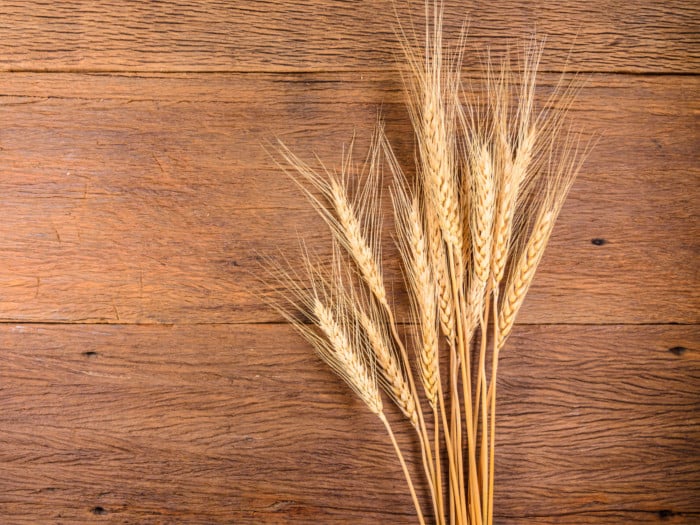
Barley is a popular type of grain. Photo Credit: Shutterstock
| Serving Size : | |
|---|---|
| Nutrient | Value |
| Water [g] | 9.44 |
| Energy | 354 |
| Energy [kJ] | 1481 |
| Protein [g] | 12.48 |
| Total lipid (fat) [g] | 2.3 |
| Ash [g] | 2.29 |
| Carbohydrate, by difference [g] | 73.48 |
| Fiber, total dietary [g] | 17.3 |
| Sugars, total including NLEA [g] | 0.8 |
| Calcium, Ca [mg] | 33 |
| Iron, Fe [mg] | 3.6 |
| Magnesium, Mg [mg] | 133 |
| Phosphorus, P [mg] | 264 |
| Potassium, K [mg] | 452 |
| Sodium, Na [mg] | 12 |
| Zinc, Zn [mg] | 2.77 |
| Copper, Cu [mg] | 0.5 |
| Manganese, Mn [mg] | 1.94 |
| Selenium, Se [µg] | 37.7 |
| Thiamin [mg] | 0.65 |
| Riboflavin [mg] | 0.29 |
| Niacin [mg] | 4.6 |
| Pantothenic acid [mg] | 0.28 |
| Vitamin B-6 [mg] | 0.32 |
| Folate, total [µg] | 19 |
| Folate, food [µg] | 19 |
| Folate, DFE [µg] | 19 |
| Vitamin A, RAE [µg] | 1 |
| Carotene, beta [µg] | 13 |
| Vitamin A, IU [IU] | 22 |
| Lutein + zeaxanthin [µg] | 160 |
| Vitamin E (alpha-tocopherol) [mg] | 0.57 |
| Vitamin K (phylloquinone) [µg] | 2.2 |
| Fatty acids, total saturated [g] | 0.48 |
| 12:0 [g] | 0.01 |
| 14:0 [g] | 0.01 |
| 16:0 [g] | 0.41 |
| 18:0 [g] | 0.02 |
| Fatty acids, total monounsaturated [g] | 0.3 |
| 16:1 [g] | 0.01 |
| 18:1 [g] | 0.24 |
| Fatty acids, total polyunsaturated [g] | 1.11 |
| 18:2 [g] | 1 |
| 18:3 [g] | 0.11 |
| Tryptophan [g] | 0.21 |
| Threonine [g] | 0.42 |
| Isoleucine [g] | 0.46 |
| Leucine [g] | 0.85 |
| Lysine [g] | 0.47 |
| Methionine [g] | 0.24 |
| Cystine [g] | 0.28 |
| Phenylalanine [g] | 0.7 |
| Tyrosine [g] | 0.36 |
| Valine [g] | 0.61 |
| Arginine [g] | 0.63 |
| Histidine [g] | 0.28 |
| Alanine [g] | 0.49 |
| Aspartic acid [g] | 0.78 |
| Glutamic acid [g] | 3.26 |
| Glycine [g] | 0.45 |
| Proline [g] | 1.48 |
| Serine [g] | 0.53 |
| Sources include : USDA [1] | |
Health Benefits of Barley
Barley is used for skin care, boosting immunity, and preventing disorders such as osteoporosis, gallstones, and diabetes. Let us look at the common benefits in detail:
May Help Keep the Gastrointestinal (GI) Tract Healthy
Barley, being an excellent source of fiber, can help rid your body of toxins. Its grass, which is possibly rich in dietary fiber, acts as a fuel source to the friendly bacteria in our large intestine. These bacteria help in fermenting the fiber content of barley, thereby forming butyric acid, which is the primary fuel for intestinal cells. It is greatly effective in maintaining a healthy colon. By keeping the intestine in proper health, it helps you increase the movement time of feces and also keeps your stomach clean.
Might Protect against Gallstones
Barley effectively helps women avoid developing gallstones. Since it is possibly rich in insoluble fiber, which helps you reduce bile acid secretion, thereby increasing insulin sensitivity and lowering the triglyceride levels. An article in the American Journal of Gastroenterology says that women consuming a fibrous diet have a 17% lower risk of gallstones as compared to other women.
May Prevent Osteoporosis
The phosphorus and copper content in barley grass guarantees overall health of bones. If you have osteoporosis, it can help be more of a natural remedy. Its juice is known to have 11 times more calcium content than milk. Calcium, as we know, is one of the key components in preserving bone health. We need manganese for normal bone production, as well as in cases of iron deficiency anemia. The manganese content found in barley works in association with B-complex vitamins.
May Help to Prevent Iron Deficiency Anemia (IDA)
Being highly nutritious, barley is particularly helpful as it strengthens your immune system and reduces the chances of cold and flu. Iron improves blood volume and prevents anemia and fatigue. It aids in proper kidney functioning and the development of red blood cells. Furthermore, it contains copper, which forms hemoglobin and red blood cells.
May Aid in Skin Care
Barley is a good source of selenium, which may help preserve skin elasticity, thereby protecting it against free radical damage. Moreover, it also improves our heart, pancreas, and immune system functioning.
Might Control Cholesterol Levels
The European Journal of Clinical Nutrition has published a study, which suggests that barley and all its products are helpful in lowering LDL cholesterol levels. This is mainly because of the presence of beta-glucan. [2]
The insoluble fiber in it may yield propionic acid that helps keep blood cholesterol levels low. Being an excellent source of both soluble and insoluble fibers, it is also recommended by doctors for its naturally low-fat content and minimal cholesterol content.
May Manage Diabetes
Barley effectively helps control type 2 diabetes mellitus because of its high-fiber content, as per a study published in the Research in Pharmaceutical Sciences [3]in 2014. Its grain has all the essential vitamins and minerals, particularly beta-glucan soluble fiber.
The December 2006 edition of Nutrition Research proved that insulin-resistant men who consumed barley beta-glucan soluble fiber had significantly reduced glucose and insulin levels as compared to other test subjects.
Might Help Protect Heart Health
Atherosclerosis is a condition when the artery walls thicken due to the coagulation or deposition of fatty materials like cholesterol. Barley contains niacin (a B vitamin) that can help reduce the overall cholesterol, lipoprotein levels, and minimize cardiovascular risk factors.
A study in the Journal of the American Dietetic Association suggests that whole-grain diets are vital for people suffering from high blood pressure. Barley, being rich in fiber, is able to lower blood pressure as well as aid in maintaining optimal weight. [4]
May Prevent Asthma
According to research published in the Plant Molecular Biology journal, 14.5 kDa is a barley endosperm protein and a major allergen in baker’s asthma disease. This is an airborne occupational ailment, mostly prevalent in confectioneries and bakeries. It proves to be a very effective preventive measure for such kinds of major wheat flour allergens. [5]
Forms of Barley Nutrition
Barley Grass is the seedling of its plant. This grass is usually harvested about 200 days after germination, while the shoots are not even a foot tall. People consume it in this form because the young leaves are rich in minerals, vitamins, antioxidants, and amino acids. Although its grains have much more dietary fiber in comparison, the grass has high levels of chlorophyll that helps to detoxify your body from harmful toxins.
Hulled Barley is also known as covered barley and is usually eaten after removing the inedible, fibrous outer hull. It is a great source of healthy nutrients. It takes a long time to soak when used in regular cooking. However, the time is worth it, considering the utility of the dehulled variety when you’re finished. Once the hull is removed, it’s known as dehulled, pot or scotch barley, which is commercially popular and is a very marketable product. The process of removing the bran and polishing is known as “pearling”.
Pearl Barley is easily available in grocery stores and is probably one of the most common ingredients for breakfast and snacks recipes all over the world. It is actually the hulled barley that is processed and the bran is removed. It is processed into a host of products like flours and flakes, which resemble oatmeal or grits.
Barley Green Powder is well known for its medicinal benefits. It is actually the powdered form of barley grass. These grasses are found in a variety of flavors and have superior solubility. Therefore, you can also consume them in the form of juice.
Barley Flour is often used, alternatively, as wheat flour or cake flour. The flour obtained from grinding whole barley is richer in nutrition than the pearl variety flour since the bran in the former remains undamaged. It contains some gluten and has been very popular in confectioneries that tend to experiment with alternate kinds of flour. It has a mild, nutty flavor, and has comparatively lower rates of calories and higher levels of fiber.
Barley Water is effective when your kidneys need rest from excessive stress. People suffering from kidney and bladder ailments can drink barley water for therapeutic uses.
How to select Barley?
When you think of buying it, you first need to decide what form you should buy. Barley is found in various forms, and each of them has a varied nutritional value. Whole grain barley has the ultimate nutritional value, found in its grain, leaves, and even the extract of the grass.
Barley is widely available as a commercial product all over the world in various forms. You need to know the exact form that will cater best to your needs. The pearled, flaked and hulled forms have different uses, so decide what you want to make before making the purchase. It is found both in bulk containers and packaged forms; ensure its freshness before taking it home. If you buy it in containers, check the expiration date and also be sure that it’s sealed properly. Even a small amount of moisture in packaged barley can spoil the grain, so be careful. Store it in clean, glass airtight containers and place it in a cool, dry place. During summer, it’s advisable to keep it in the refrigerator.